
Rice is an economically important crop in Thailand, widely grown in every region of the country and one of its top export commodities. One problem affecting rice exports is varietal adulteration (mixing of varieties), which can damage the reputation of Thailand's rice trade.
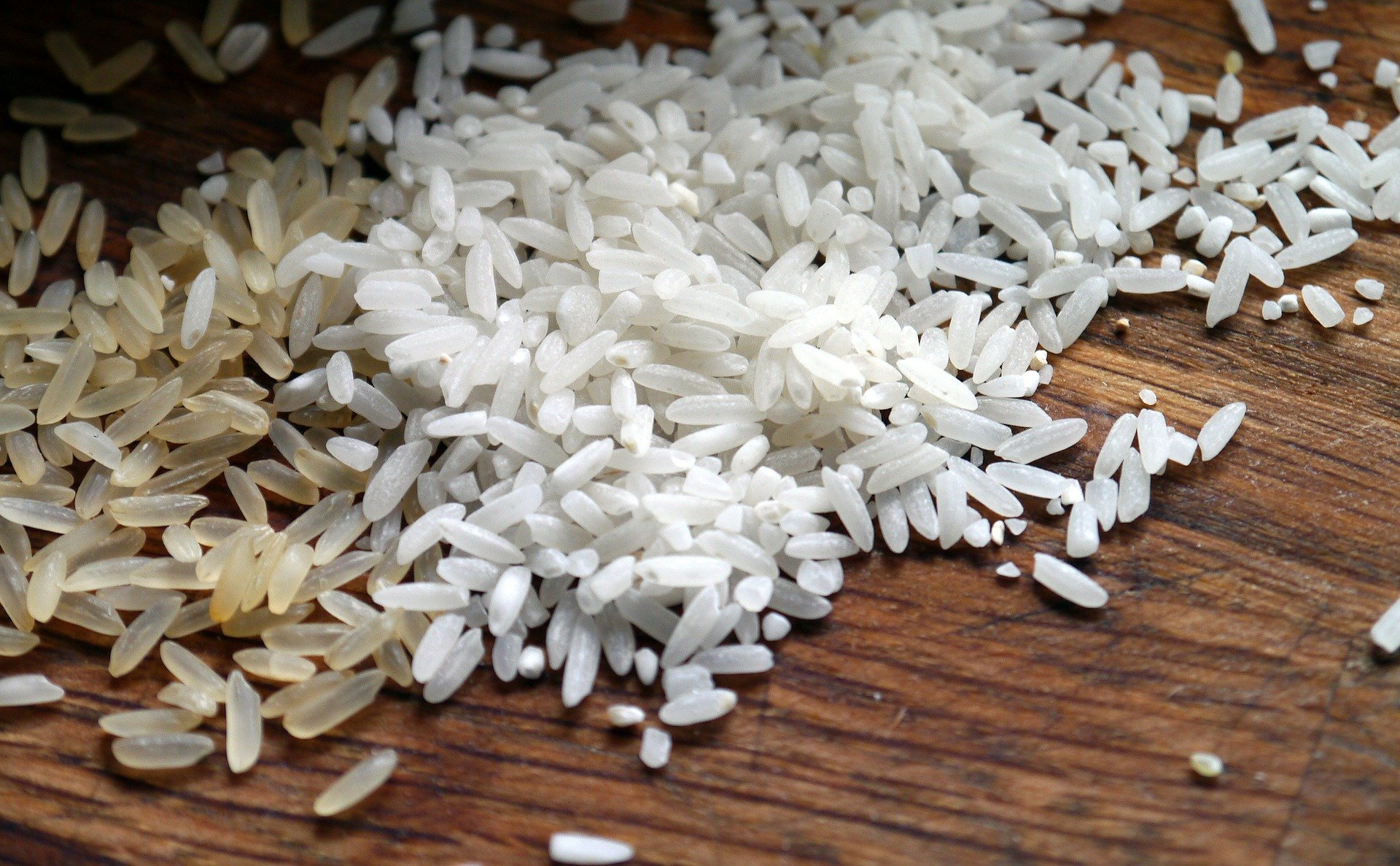
Varietal adulteration can occur at many stages of rice production: mixing of varieties before planting, mixing of paddy during harvest or milling, and deliberate adulteration.
Testing
Testing for adulteration based on physical characteristics such as grain length, width and translucency can lead to errors, because the characteristics of different varieties may be so similar that they cannot be clearly told apart. Testing based on differences in chemical properties, such as the percentage of amylose, gel consistency and gelatinization temperature, can identify rice varieties, but several properties must be considered together, and many varieties have similar amylose percentages.
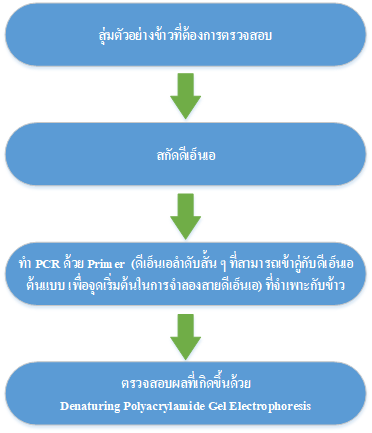
Today, DNA markers are used to identify rice varieties and test for adulteration. This method is specific and accurate and can detect adulteration with certainty. The test is carried out as follows:
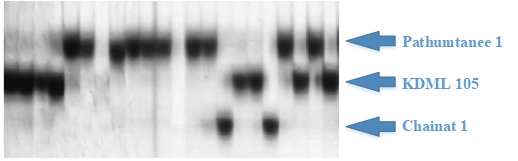
Results
The test shows whether the rice sample is the variety in question, and what percentage of other varieties it contains.