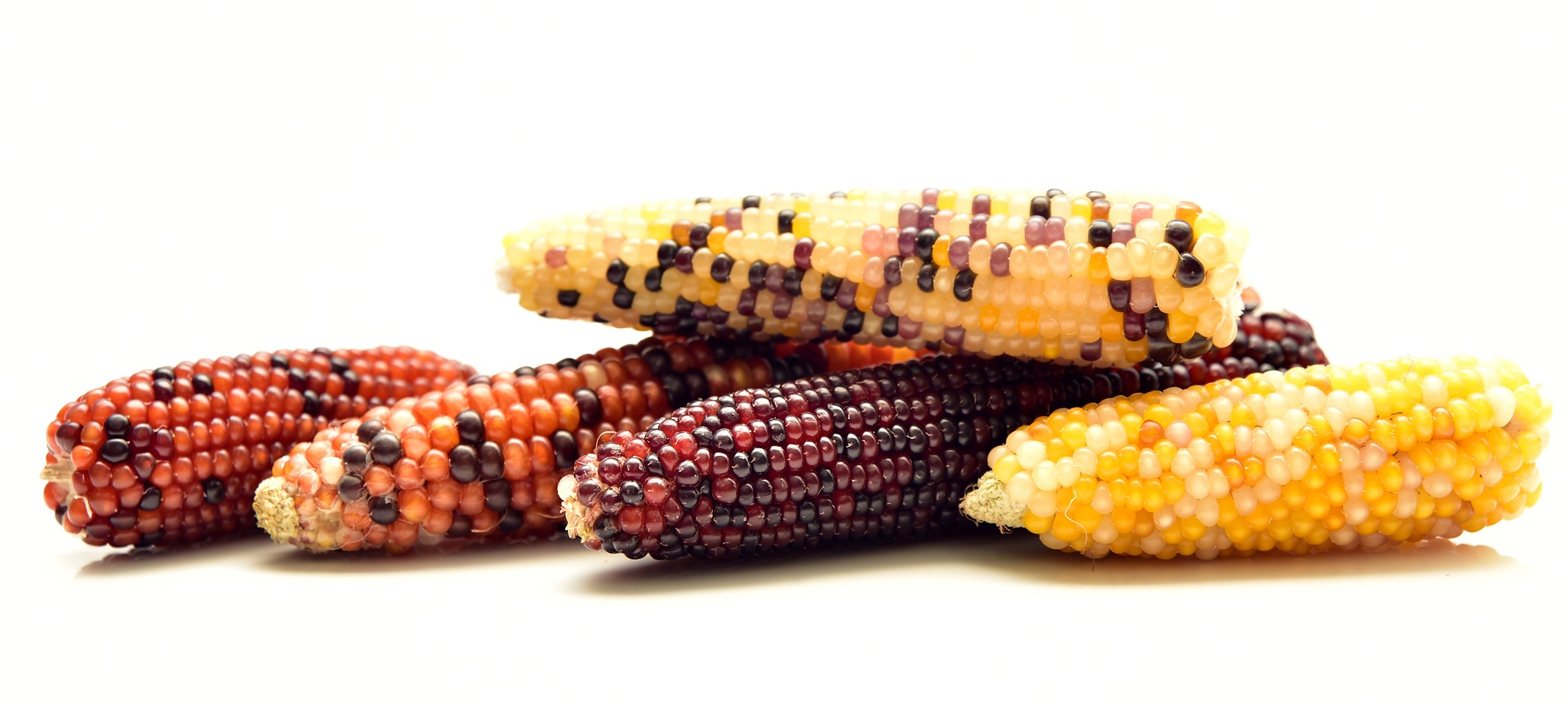
Maize is an economically important crop in Thailand, in high domestic demand from the past to the present, so the seed business has grown rapidly. Seed producers compete on product quality while cutting production costs as much as possible. Using DNA markers for testing reduces many problems in production and quality inspection. The DNA Technology Laboratory uses DNA markers to test maize as follows:
DNA fingerprint database of maize varieties
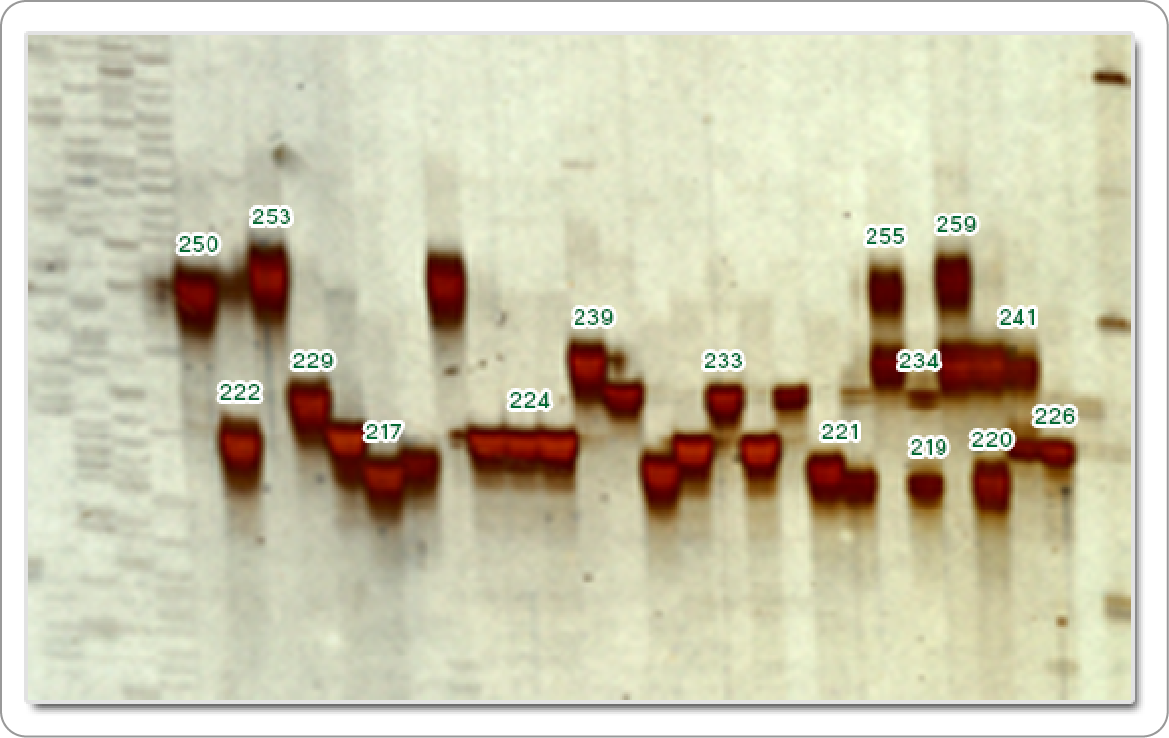
A DNA fingerprint is produced for each maize variety to serve as a reference database. It can also be used to select genetic bases for breeding new varieties, and as supporting evidence in cases of variety theft or adulteration.
Purity testing of inbred maize lines
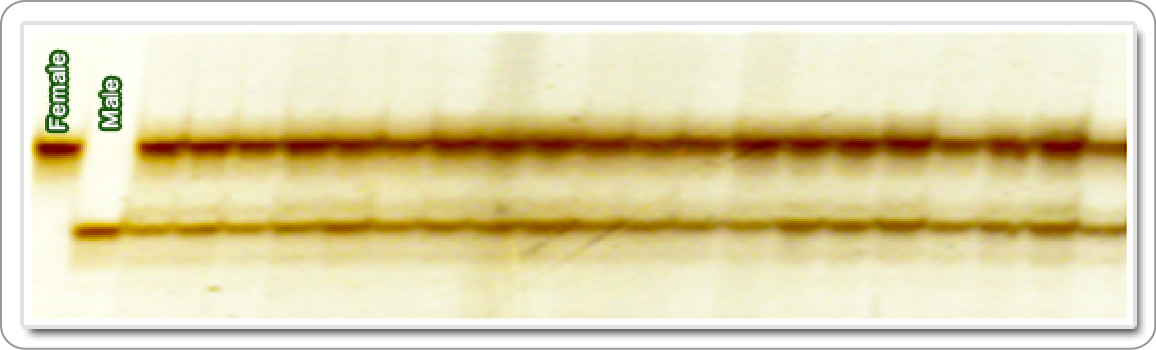
The purity of male and female parent lines is critically important in producing hybrid seed so that the hybrids are true to type. Judging from outward appearance can be uncertain because of variation with changing environmental conditions. DNA testing allows breeding stock to be selected correctly and quickly, reducing production costs and ensuring the correct variety.
Purity testing of hybrid maize
To verify that hybrid maize is true to the intended variety and/or whether it is adulterated with other maize varieties.
Testing for self-pollination and off-types in hybrid maize
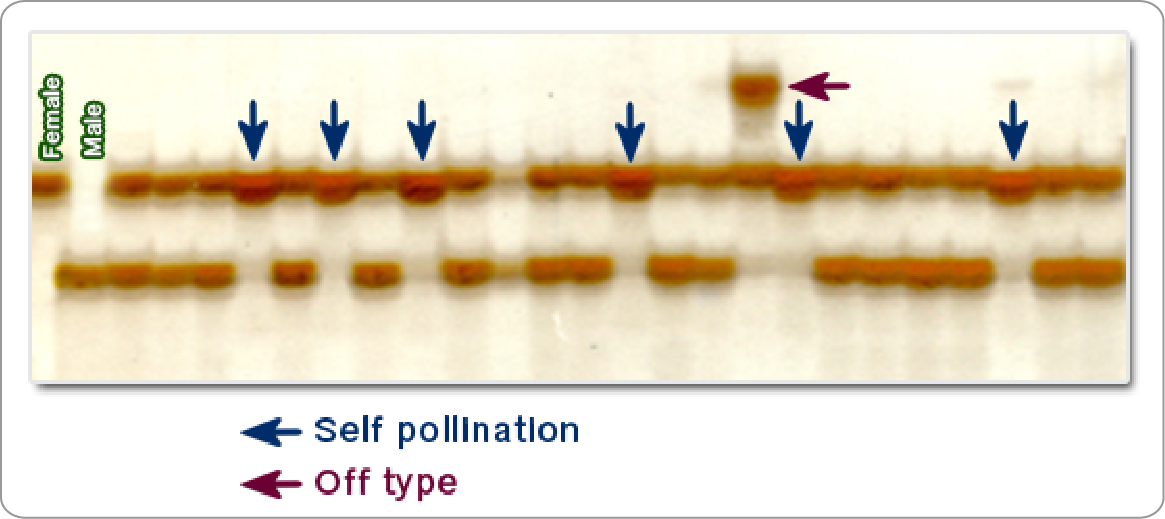
In hybrid maize seed production, the female parent may self-pollinate or be cross-pollinated by other maize varieties, producing hybrid seed that is not true to the intended variety. DNA testing can clearly distinguish true hybrids from self-pollinated and off-type plants.