
Mad cow disease is caused by an abnormally structured prion protein. Determining whether a beef product comes from an infected animal is therefore difficult, because prion protein already exists in animals and humans as a protein with a normal structure. Telling whether a beef product came from an infected animal is hard and slow, so many countries have laws banning imports of products containing beef from countries where mad cow disease has been found.
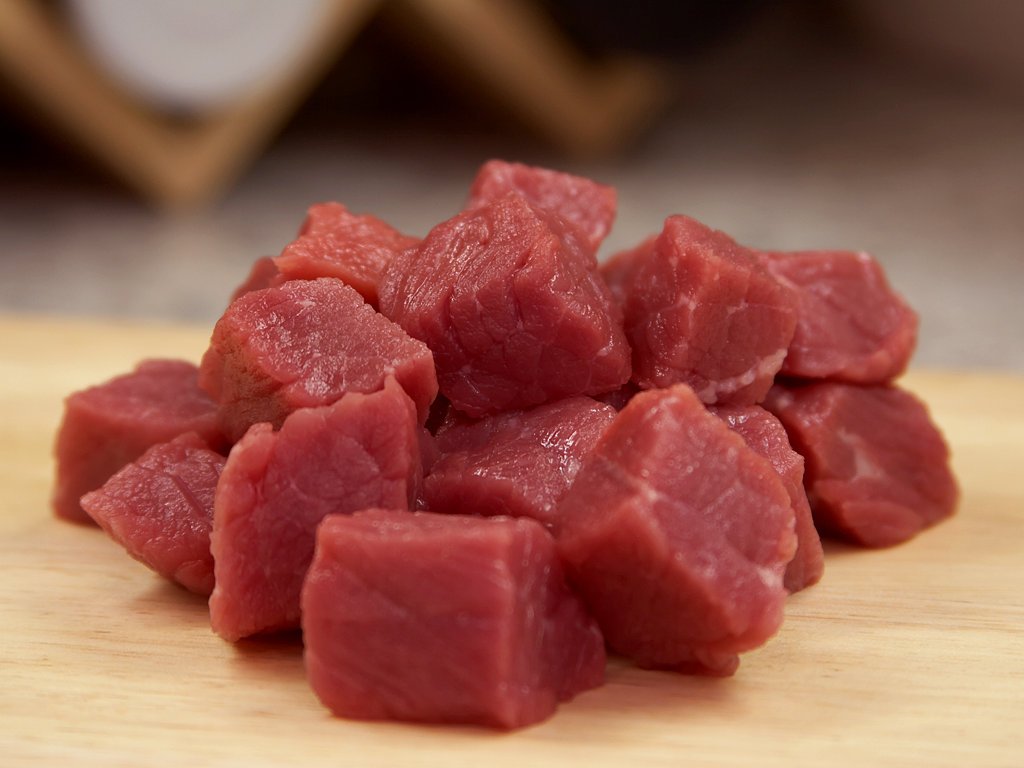
If a product has been processed so far that it can no longer be told whether it is beef, pork or another animal, import laws become difficult to enforce. The DNA Technology Laboratory therefore developed a method to test whether a product contains beef, using DNA markers specific to cattle. This was the first time in Thailand that scientific results were used as evidence for enforcing international law, and the method is accepted in Europe.
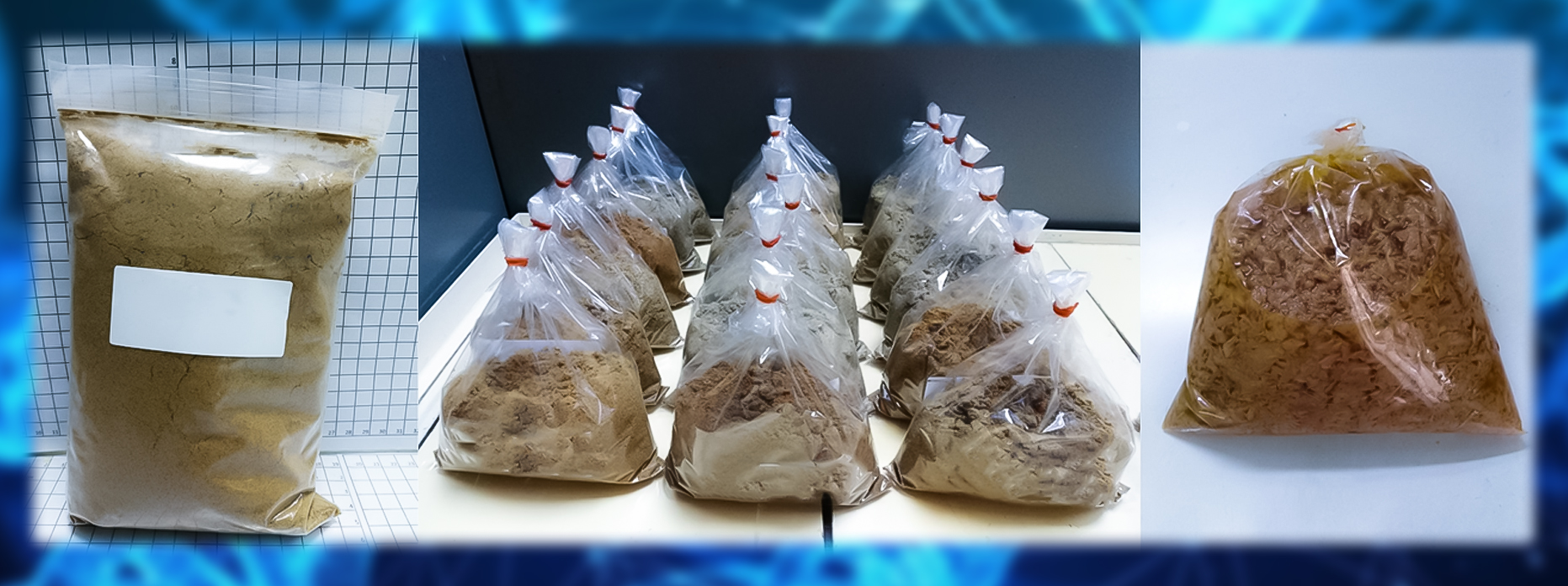
Besides testing for cattle DNA contamination to prevent imports of beef, the laboratory also tests for pig and chicken DNA in raw materials and general products, for example to certify that halal food is free of pig DNA contamination. The same method as for cattle is used; only the probe is changed to one specific to the species being tested.
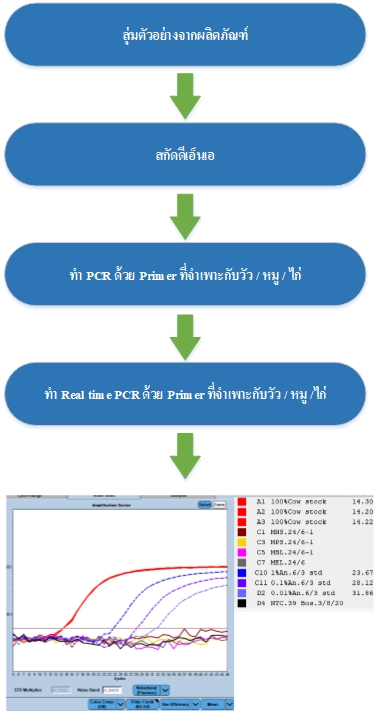
Test results
When cattle-specific DNA markers are used to test raw materials and products for beef contamination, a curve appears (as in examples 1 and 2) if the material or product is contaminated with beef. If no curve appears, the product contains no beef contamination.
*Results of pig/chicken DNA detection look the same as for cattle DNA.