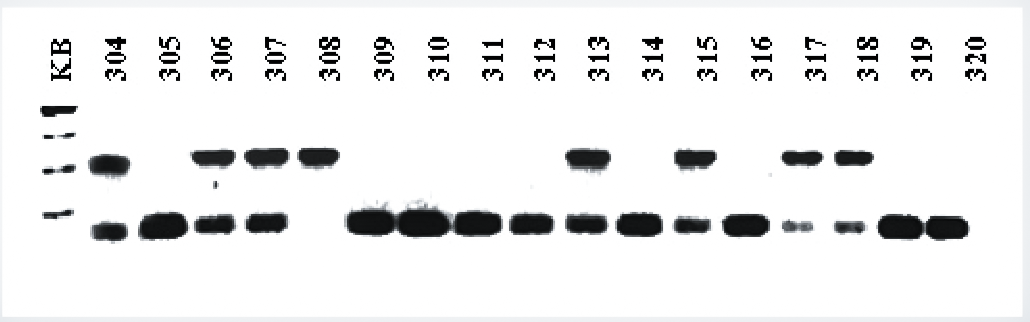
Pigs with the malignant hyperthermia (MH) genotype, when stressed (for example by transport, mating or fighting), develop raised body temperature and panting, and sometimes die suddenly from shock because the body cannot bring its internal temperature back to normal. Meat from pigs with this genotype is pale, soft and exudative, giving low-quality carcasses and economic losses in pig production.
The malignant hyperthermia (MH) genotype
It results from a gene mutation and is hereditary. The MH genotype can be tested by having pigs aged 3–8 weeks inhale halothane gas and observing stiffening of both hind legs. Pigs with the MH genotype stiffen both hind legs and are classed as halothane-positive; normal pigs and carriers keep their hind legs relaxed and are classed as halothane-negative. The halothane test therefore cannot separate normal pigs from carriers, and age, sex and breed are also reported to cause errors. Today DNA markers are used to test pigs, and can clearly separate normal pigs, carriers and MH pigs. The test can be done at any age, using hair root cells or blood, without harming the pig.